Risk reduction methods
Bored drains / horizontal drains

Drains can be bored sideways into a slope, to allow soil water to drain from the ground. Bored drains must be combined with a method of managing the resulting water. In this example we have wick drains against the slope as well as bored drains extending meters below ground; concrete was then sprayed around the drains.
Field drains

Trench like drains can be installed below ground to catch water that is moving down-slope. This technique is often used to above high risk areas. In this example we trenched 1m deep and approximately 30m across a slope above a slip prone area, soil water is now collected and piped away.
Infiltration control

There are many methods of managing water infiltration before it enters the ground. These range from plastic sheets for urgent work, through to sophisticated systems that reduce infiltration while supporting plant growth. This photo is permeable concrete that we are trialling; we are involved in trials of other plant-friendly methods.
Planting

Planting is ecologically and visually better than a barren slope but can also provide significant landslide risk reduction. Planting can be a stand-alone measure, or combined with erosion protection etc. In this example we used biodegradable mesh, and plants will provide the risk reduction.
Erosion protection

There are various erosion protection products that range from short term biodegradable layers for improving vegetation establishment, through to high tensile mesh that offers some support to the slope. In this example we completed erosion protection to the low risk area below, and structural mesh to the high risk upper area.
Driven pins and soil nails

Erosion protection products can be secured with pins that are driven into the slope, or with soil nails that are grouted into bored holes. These are often a galvanised threaded bar that can receive a nut, as shown in our example, but we also install other systems.
Landslide repair methods
Rock anchors / Rock bolts

Rock anchors are giant bolts that are drilled many meters into a slope, where they are grouted into the underlying rock. Drilling and installing rock anchors is a core part of our business.
Sprayed concrete
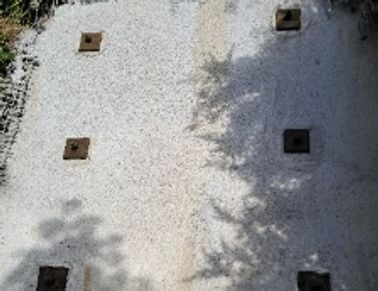
Reinforced sprayed concrete is a common method of completing structural repairs after a landslide. The concrete facing is generally secured with rock anchors. In this example photo, our anchor nuts and washers are visible, but these can also be embedded.
Rockfall mesh
There are many structural mesh systems, but they generally involve a high tensile mesh that is restrained with rock anchors to give a structural solution without concrete. This is a typical example for ours: galvanised anchors and steel washers restrain mesh over a coco-coir underlay.
Timber pole retaining
Timber pole walls can be the answer where access allows. Larger walls may require rock anchors to restrain them, as can be seen in this example where we used steel waler beams to connect anchors to the wall.
Combined methods
Often the highest risk areas require a structural solution, while surrounding areas receive erosion protection to reduce the risk, such as this example where we completed anchored concrete below the driveway and planted rockfall mesh above.
Complex
There can be complex combinations to achieve a structural solution, like this example where we completed a timber and steel retaining wall, with rock anchored in-stu concrete below.